
Start with the decision the report must support
A desktop review can help you explore a property and prepare questions. If standing timber is central to the purchase price, ask what needs to be measured or inspected in the woodland. If an inheritance or another professional requires a valuation, establish their requirements before commissioning it.
Write a practical opening brief: “I need to assess this purchase offer as at this date.” Attach the complete parcel list. An appraiser can then explain the work needed to answer that question and the information still missing.
Desktop review and field appraisal cover different evidence
| Compare | Desktop review | Field assignment |
|---|---|---|
| Evidence | Available data and supplied documents | Observations and agreed measurements |
| Tree stands | Assumptions to disclose | Specified sampling or inventory |
| Access | Mapping information | Observable condition and harvesting constraints |
| Output | Indicative starting point | Analysis within the agreed scope |
A site visit does not automatically include counting every tree. Ask which areas will be inspected and how different stands will be assessed. Receiving a PDF is not evidence that any field verification took place.
Identify what the fee actually includes
Look for document review, travel, fieldwork, measurements, analysis and a discussion of the findings. Establish whether taxes and expenses are included, whether another visit could be charged and how additional work would be approved. A fixed fee is useful when its boundaries are clear.
If the adviser might later market the timber, distinguish that remuneration from the appraisal fee. CNPF explains the role of the appointment and different charging arrangements used by forestry professionals in France.
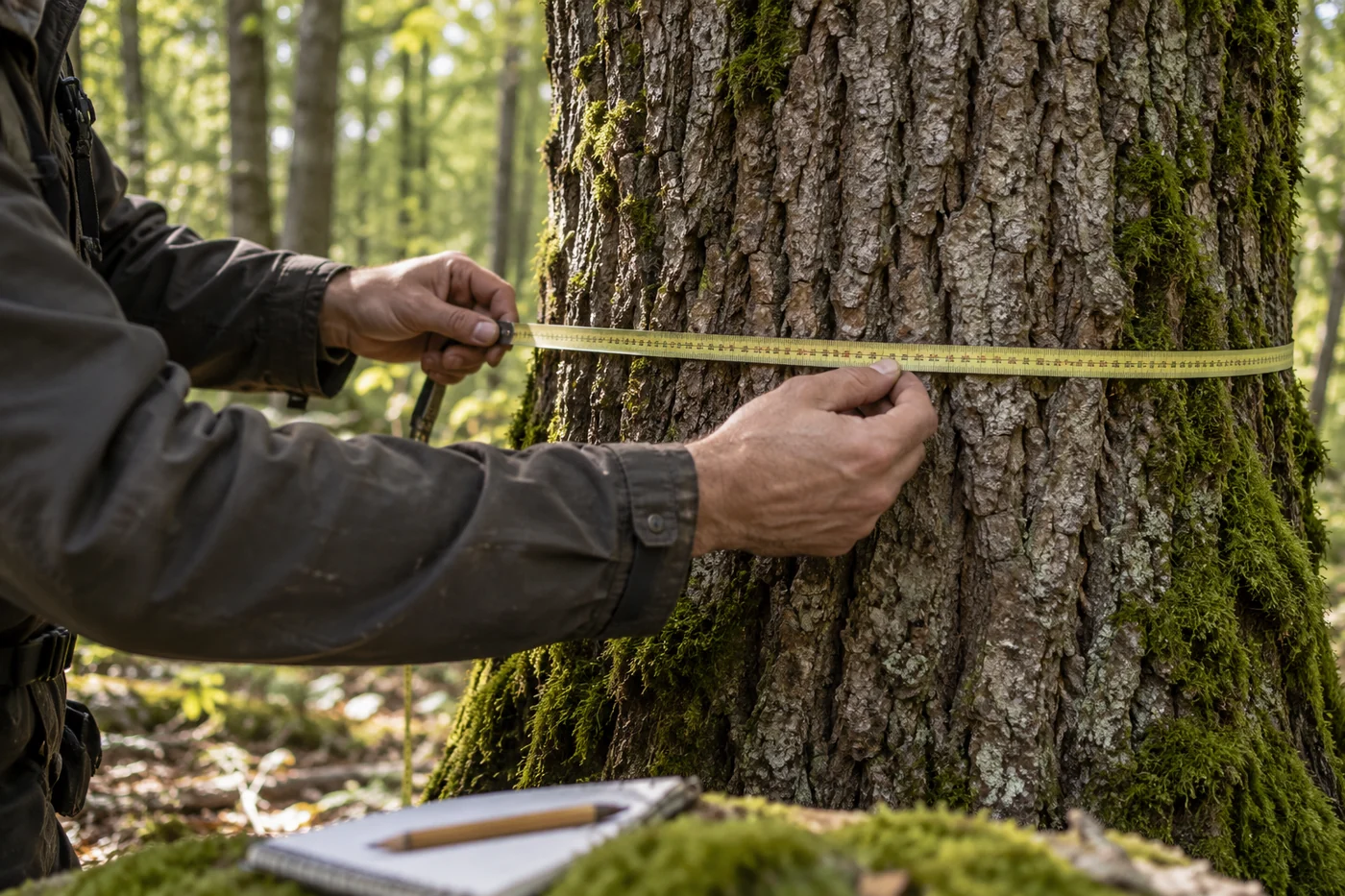
Gather the right documents and prepare the visit to compare assumptions with conditions on the ground.
Editorial illustration · not a depiction of an analysed propertyDescribe the features that may change the workload
Flag scattered parcels, steep ground, dense vegetation, uncertain access, mixed stand ages, recent damage and old records. Ask which of these features affects the proposed method or time on site. The answer is more informative than a fee divided mechanically by hectares.
Consider a hypothetical comparison: two ten-hectare properties. One is an accessible, uniform block; the other has six separate pieces and several stand types. Equal area does not imply equal inspection effort or equal confidence in an estimate. Give both bidders this information early.
Ask for a report you can interrogate
Request a map of the assessed area, the valuation date, observations, documents and material assumptions. If land and tree values are separated, ask how they are reconciled without counting the same benefit twice. Timber calculations should state the unit, sale stage and costs included.
The conclusion should identify uncertainties that could materially change the result: unmeasured volume, access needing confirmation or a health issue requiring investigation. An explained range can support a decision better than a precise-looking figure with undisclosed assumptions. Ask to see an anonymised contents page before commissioning.
Check the signatory and intended use
In France, CNPF explains that the expert forestier title is restricted to people on the CNEFAF national list. Check the individual signing the report and ask about relevant experience in the region.
Specify who will use the document: you, fellow heirs, a buyer or another professional. Confirm whether that intended use is within the assignment, which supporting records are required and how findings will be delivered. Agreeing this early can prevent paying for a second assignment to answer a foreseeable requirement.
Use the same brief to compare proposals
Send each provider the same documents and decision question. Put their responses into six columns: scope, fieldwork, method, deliverables, timing and total cost. Clarify blank cells before deciding which offer is better value. Keep optional timber marketing separate so an apparently low appraisal fee does not obscure another commercial arrangement.
An indicative WoodWorth review based on public data can help assemble the initial dossier. It does not provide a field visit, tree inventory or appraisal for a particular formal use. Carry unresolved questions into the fieldwork brief.
COMMON QUESTIONS
A few things to clear up.
How much does a forest appraisal cost in France?
There is no useful universal fee for every assignment. Request a quote tied to the property, method and intended use, then compare the total and included work.
Does a site visit include a complete tree inventory?
Not automatically. Ask for the inspection protocol, areas covered, measurements and any sampling limitations. A visit is an activity, not a complete description of an inventory.
What should I send when requesting a quote?
Send the commune, cadastral references, area, available maps, management records, recent harvesting information and the purpose and deadline of the appraisal.
Sources and dates
Figures retain their reference year. Worked examples are educational; property-specific amounts require verification.
- CNPF Hauts-de-France Normandie — Les professionnels de la gestion forestièreConsulté le 19/10/2026
- CNPF Nouvelle-Aquitaine — À qui s’adresser pour gérer une forêt ?Consulté le 19/10/2026
Sources accessed 19 October 2026. Independent sources; no partnership implied.
This guide provides documentary context. For a binding decision, have field, legal or insurance issues checked by the relevant professional.