What the 2026 publication actually measures
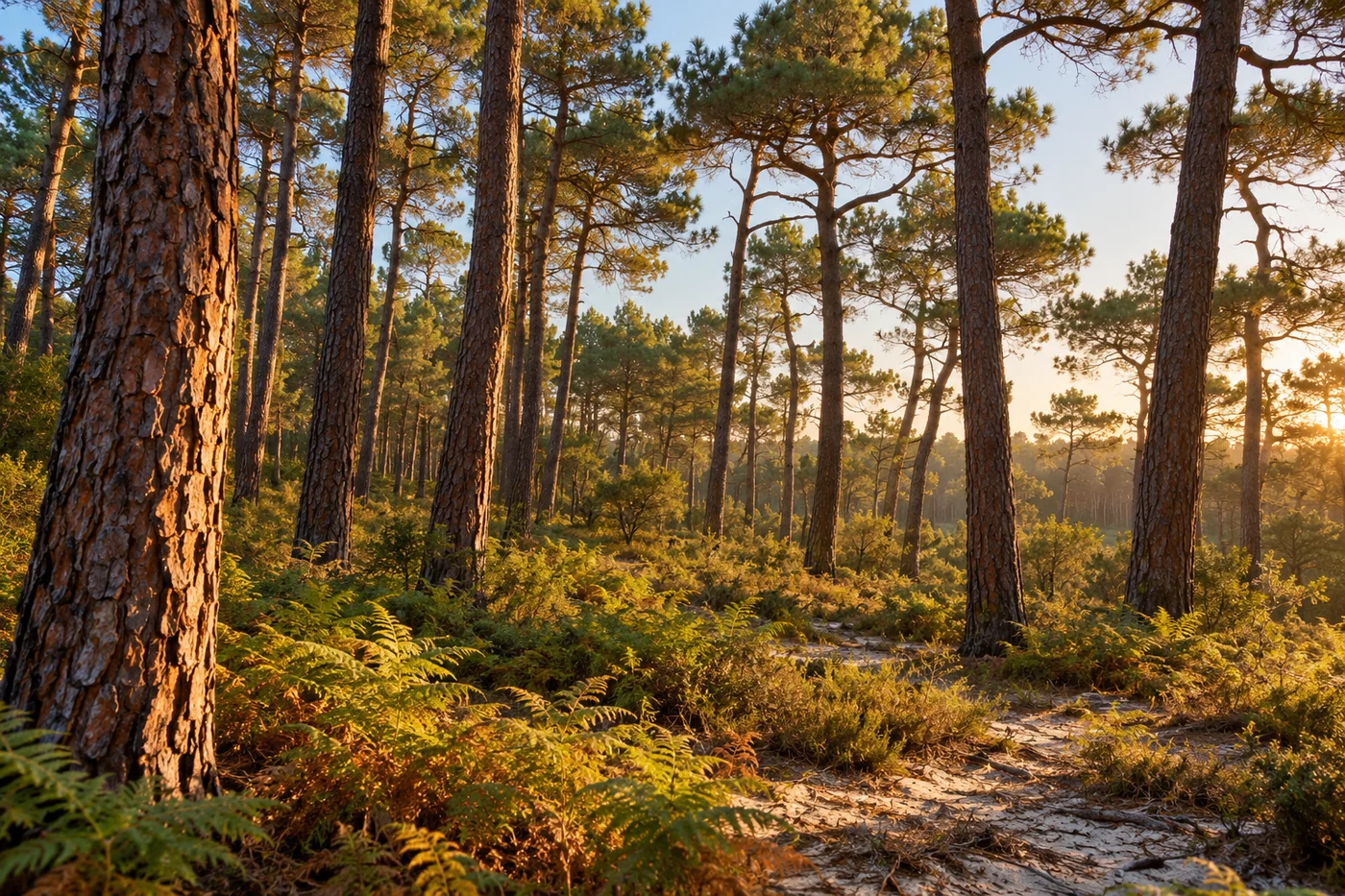
The France Bois Forêt 2026 indicator, pages 28–29 reports €53/m³ for maritime pine in 2025, at a mean individual tree volume of 1.25 m³. The sample is mainly northwestern France and does not represent most Aquitaine supply contracts. It is a grouped-sale benchmark, not a quote for a Landes harvest.
For a specific lot, seek a dated local comparison with genuinely similar characteristics before using this number in negotiations.
Three price expressions that cannot be swapped
| Expression | What is priced | Essential question |
|---|---|---|
| €/m³ standing | Trees before harvesting | Who organises and pays for felling and extraction? |
| €/m³ roadside | Felled timber at the agreed landing | Which costs remain with the seller? |
| €/ha of woodland | The landholding and its characteristics | Which timber, rights and liabilities are included? |
Also establish the volume measurement convention and treatment of bark. Offers using the same unit can still describe different quantities. Avoid converting tonnes into cubic metres without appropriate information about the actual timber.
Record individual tree volume as well as total volume
A hundred cubic metres in small trees is a different lot from a hundred cubic metres in larger logs. When preparing an enquiry, separate estimated total volume from mean volume per tree. Add the observed quality and the proposed type of harvest. This helps buyers explain their assumptions.
CNPF Nouvelle-Aquitaine publishes maritime pine sale results by individual tree volume. Use those comparisons to ask better questions, checking geography, date and sale method before treating them as evidence for your own property.
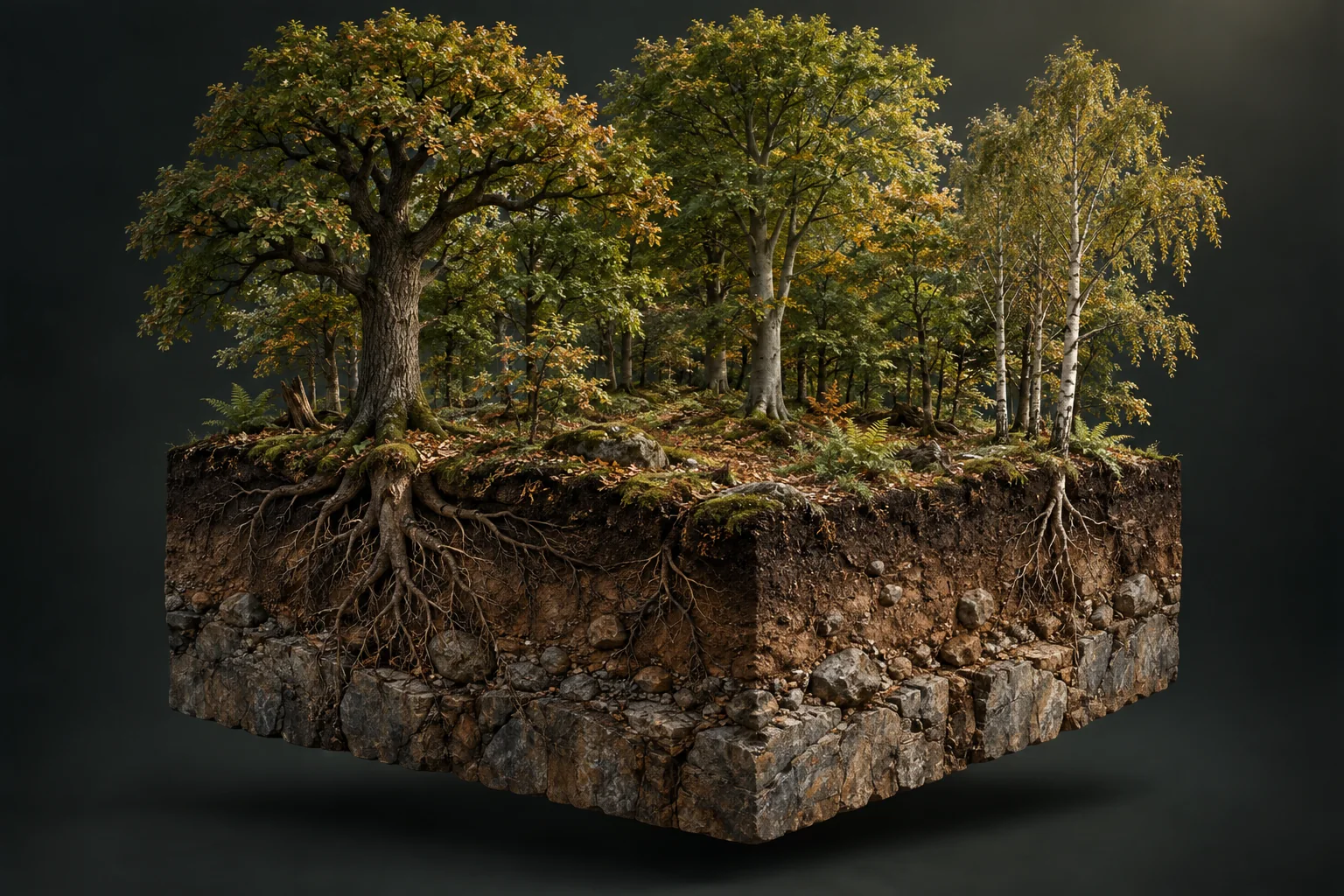
Species, ages and stand structure change how woodland is assessed. A visit helps compare hypotheses with the trees actually present.
Explanatory illustration · not a depiction of an analysed propertyCompare the amount left to the seller
Set out expected receipts, costs borne by you, intermediary remuneration and any agreed works for each offer. Do not deduct an expense twice when a standing-timber buyer already bears it. Separate the transaction costs from future woodland regeneration expenditure, so both remain visible.
A purely hypothetical example: €15,000 of roadside receipts less €4,000 of seller-paid costs leaves €11,000 before other expenses and tax. It cannot be compared directly with a €15,000 standing-timber offer. The figures illustrate the calculation only; they are not market prices or a suggested harvesting budget.
Give every buyer the same lot description
List the parcels, harvesting type, estimated volumes and measurement method, timber categories, access and preferred timetable. Add a landing map and known constraints. Ask buyers to identify missing information and state the assumptions behind their quotations.
CNPF highlights the value of timber assessment and quality classification. A common dossier helps distinguish a higher unit price from a different volume estimate or an extra service. Keep those explanations separate. If one buyer assumes better access, resolve the access question before concluding that its offer is more generous.
A timber quote does not value the entire pine woodland
Multiplying hectares by a cubic-metre price is meaningless without volume per hectare. Even after establishing volume, a property assessment must consider the land, stand ages, access, condition and future spending. The entire standing volume may not be available for immediate harvest.
Ask two separate questions: what could the proposed timber sale yield, and what is the woodland property worth? The answers may move differently. Demand for a particular timber product does not translate mechanically into the same change in every hectare’s value. Keep the sale appraisal and the property appraisal distinct.
Confirm five points before accepting
Get the following points into the written offer or sale documentation:
- the exact area and trees included;
- the lump sum or unit-payment rule;
- how volumes will be measured and accepted;
- who performs and pays for each operation;
- timing, payment conditions and agreed reinstatement work.
Price differences become meaningful when these terms match. If the volume assumptions remain uncertain, resolve that first. A better unit price cannot repair a poor inventory. Keep the accepted description with the offer so later discussions use the same baseline.
COMMON QUESTIONS
A few things to clear up.
Does a national maritime pine benchmark apply in the Landes?
Not automatically. Check the geography and transaction sample, then compare local lots with similar individual tree volumes, quality and harvesting conditions.
Is a higher roadside price necessarily better?
Only after allowing for costs and responsibilities that remain with the seller. Compare expected net receipts using the same volume measurement conventions.
Can timber prices determine a price per hectare?
Not on their own. You also need stock, age, quality and access information, plus an assessment of the landholding and future costs without double counting.
Sources and dates
Figures retain their reference year. Worked examples are educational; property-specific amounts require verification.
- France Bois Forêt · ASFFOR · Experts Forestiers de France · La Forestière — Prix de vente des bois sur pied en forêt privée – Indicateur 2026, pages 28–292026
- CNPF Nouvelle-Aquitaine — Le prix des boisConsulté le 19/10/2026
- CNPF — Vente de boisConsulté le 19/10/2026
Sources accessed 19 October 2026. Independent sources; no partnership implied.
This guide provides documentary context. For a binding decision, have field, legal or insurance issues checked by the relevant professional.