What the 2026 indicator actually means
On 6 July 2026, France Bois Forêt published its announcement of the indicator covering 2025 standing-timber prices in private forests. The publication year does not turn those observations into October 2026 transaction prices. Keep the two dates separate in your notes.
Use an annual reference to understand context. To inform a current asking price, also look for evidence closer to the planned sale date and relevant supply area. A report title alone does not establish when the timber changed hands or whether the comparison matches your location.
An actual sale observed in June 2026
The CNPF note on the Meymac sale of 4 June 2026 reports these results for homogeneous Douglas fir lots:
| Mean individual tree volume | Lots | Volume-weighted mean price |
|---|---|---|
| 0.4 < Vu < 1 m³ | 3 | €68.3/m³ |
| 1 < Vu < 2 m³ | 9 | €93.6/m³ |
| Vu > 2 m³ | 5 | €106.9/m³ |
These are categories within one sale, not a national tariff. The note defines homogeneous lots using at least 80% of the main species.
The same currency does not make prices comparable
| Unit or expression | What to establish |
|---|---|
| €/m³ standing | Trees included, volume and harvesting still required |
| €/m³ roadside | Felled timber, agreed landing and remaining costs |
| €/tonne | Product, moisture and weighing convention |
| €/ha | Property transaction and landholding characteristics |
As a separate land-market reference, Safer reports an average forest price of €4,950/ha for 2025. This does not measure a timber price. It cannot convert a timber volume directly into a woodland property valuation.
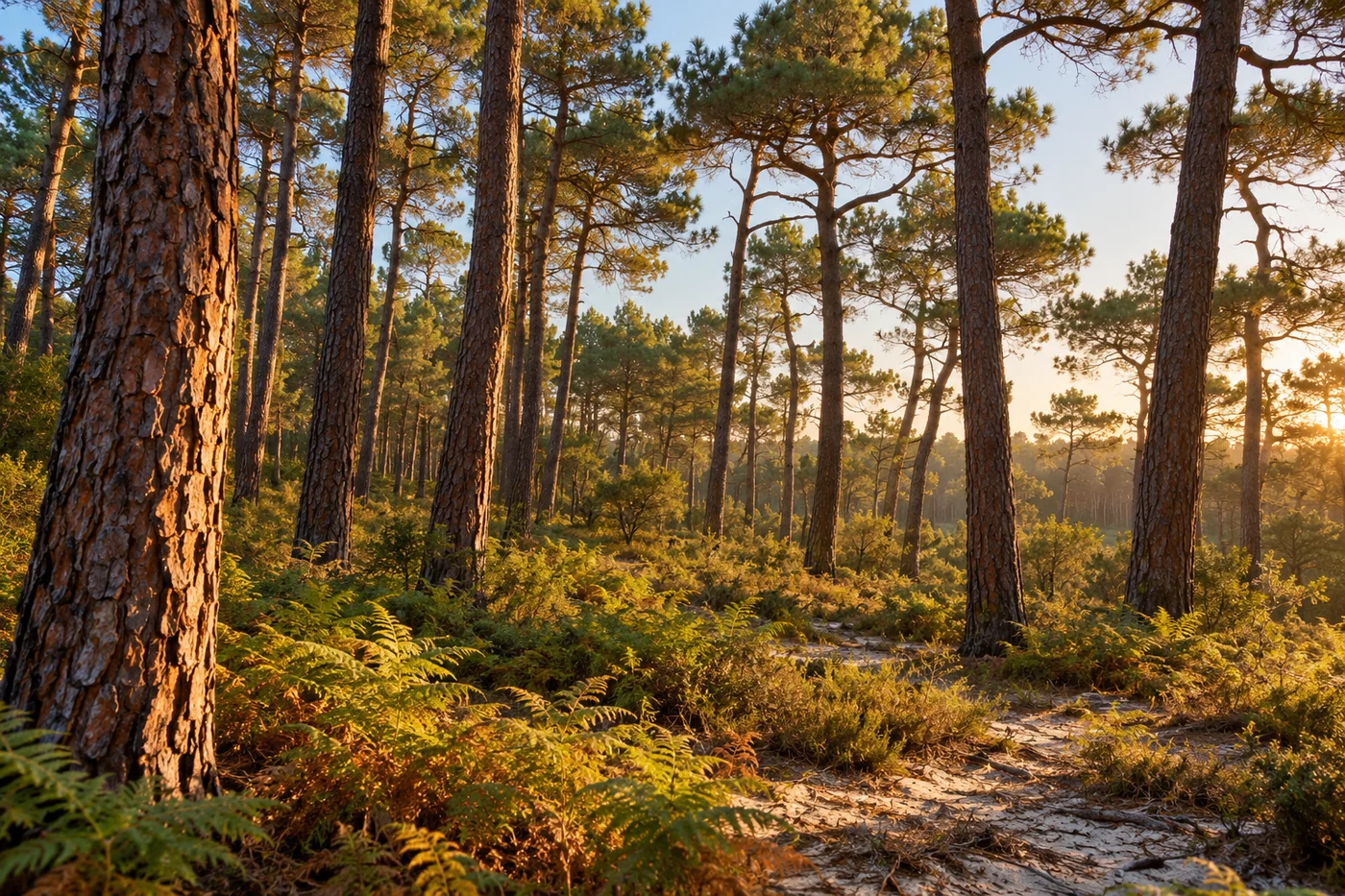
The landscape gives context; value depends on the selected land, its trees and access conditions.
Editorial illustration · not a depiction of an analysed propertyWhy ranking species by price can mislead
Even where a table compares species, check whether the trees have comparable sizes, quality, origin and sale conditions. A mean based on large trees is not a price for young thinning material. The number of lots also helps establish how much weight to place on an observation.
Do not use those figures to rank whole woodland properties of equal area. Actual composition, volume, access and future expenditure still need examination. A useful comparison starts with the product being sold, then considers the price. The species name alone does not define the transaction.
Build a comparison sheet with seven columns
For each reference, record sale date, area, species, product or quality, individual tree volume, delivery stage and price. Add the source and any missing information. Set aside comparisons whose material differences cannot be explained. This preserves the context when you return to the figures later.
Consider a hypothetical comparison between large roadside logs and a standing thinning lot. Different prices do not demonstrate a market rise or fall. First reconcile the products and operations included. Transport, processing and work already completed cannot be ignored simply because both quotations use cubic metres.
Move from a market reference to your own offers
Describe your lot and volume assumptions before seeking comparable bids. Require the same scope, measurement basis and clear allocation of costs. Ask each prospective buyer to identify assumptions that affect its price rather than leaving them implicit in a headline amount.
A published sale result does not guarantee what your timber will achieve. It helps identify differences and ask useful questions about quality, access cost, timing, lot size and outlets. A properly documented enquiry produces evidence tied more directly to your woodland than applying a national mean to an uncertain volume.
Keep a dated dossier rather than a permanent price
Save the references consulted, access dates, transaction periods and characteristics that made them relevant. Update them as the project progresses, especially if tree condition, access or the selling timetable changes. A one-off observation is not an annual forecast.
When considering a harvest, assess market evidence alongside the management programme, stand condition and expected costs. When buying a French woodland property, add the land and rights analysis. The same market data can inform both decisions without determining either one. Keep the unresolved questions visible instead of hiding them behind a single estimated figure.
COMMON QUESTIONS
A few things to clear up.
Do all 2026 timber price reports cover sales made in 2026?
No. The year may refer to publication. Check the transaction period: the France Bois Forêt indicator published in 2026 covers 2025 prices.
Is the average from a local sale a tariff for my timber?
No. It describes the analysed lots. Check species, individual tree volume, quality and sale conditions before using it as a comparison for your own lot.
Can timber prices predict the value of a French woodland?
They inform prices for particular timber products, not every component of a property. Actual volume, land, access, rights and future costs also require assessment.
Sources and dates
Figures retain their reference year. Worked examples are educational; property-specific amounts require verification.
- France Bois Forêt — Prix de vente des bois sur pied en forêt privée : l’indicateur sur les prix 2025 est paru2026-07-06
- CNPF Nouvelle-Aquitaine — Analyse des ventes groupées de Meymac du 4 juin 20262026-06
- Safer — Édition 2026 – Le marché des forêts en 20252026-05-21
Sources accessed 19 October 2026. Independent sources; no partnership implied.
This guide provides documentary context. For a binding decision, have field, legal or insurance issues checked by the relevant professional.