What makes this stand different
Douglas fir’s prospects depend on a suitable site throughout the growing cycle. Large branch defects reduce future log quality. Young thinning products differ from larger sawlogs, and young trees have a larger proportion of sapwood. CNPF · 2020-04 · CNPF Île-de-France Centre-Val de Loire · 2023-09
Questions that change the assessment
1. Will soil, water supply and exposure remain suitable?
2. Which trees were pruned, and how long is the clear bole?
3. Have stocking levels and thinning maintained stability?
Documents to request before an offer
Pruning dates and records; volume and diameter inventory; recent timber sale records; a site and health diagnosis. Request dated documents tied to the correct parcels. Aerial imagery shows canopy, not internal timber defects or legal access rights.
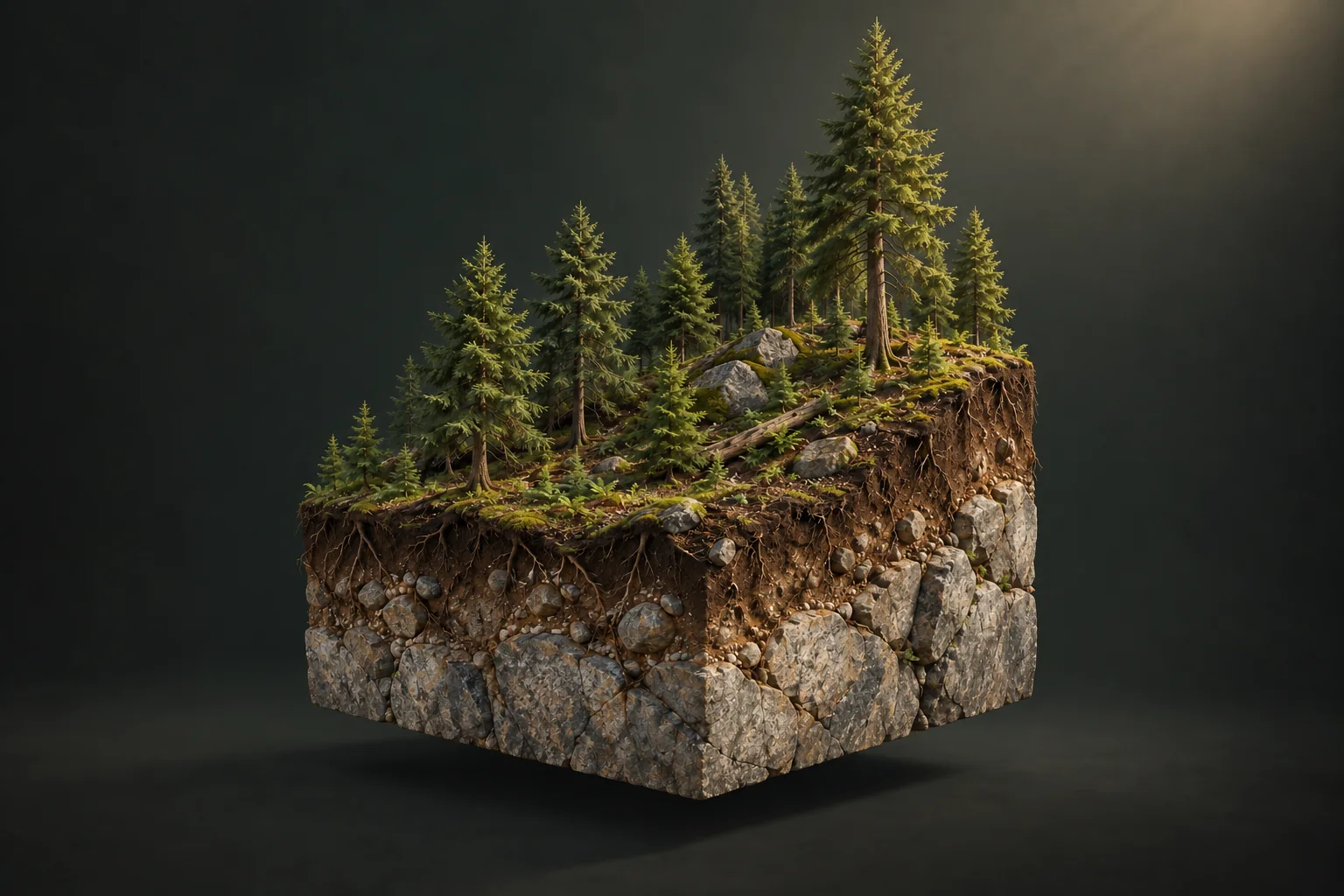
Topography matters alongside visible tracks. On site, check working access, harvesting conditions and legal access rights.
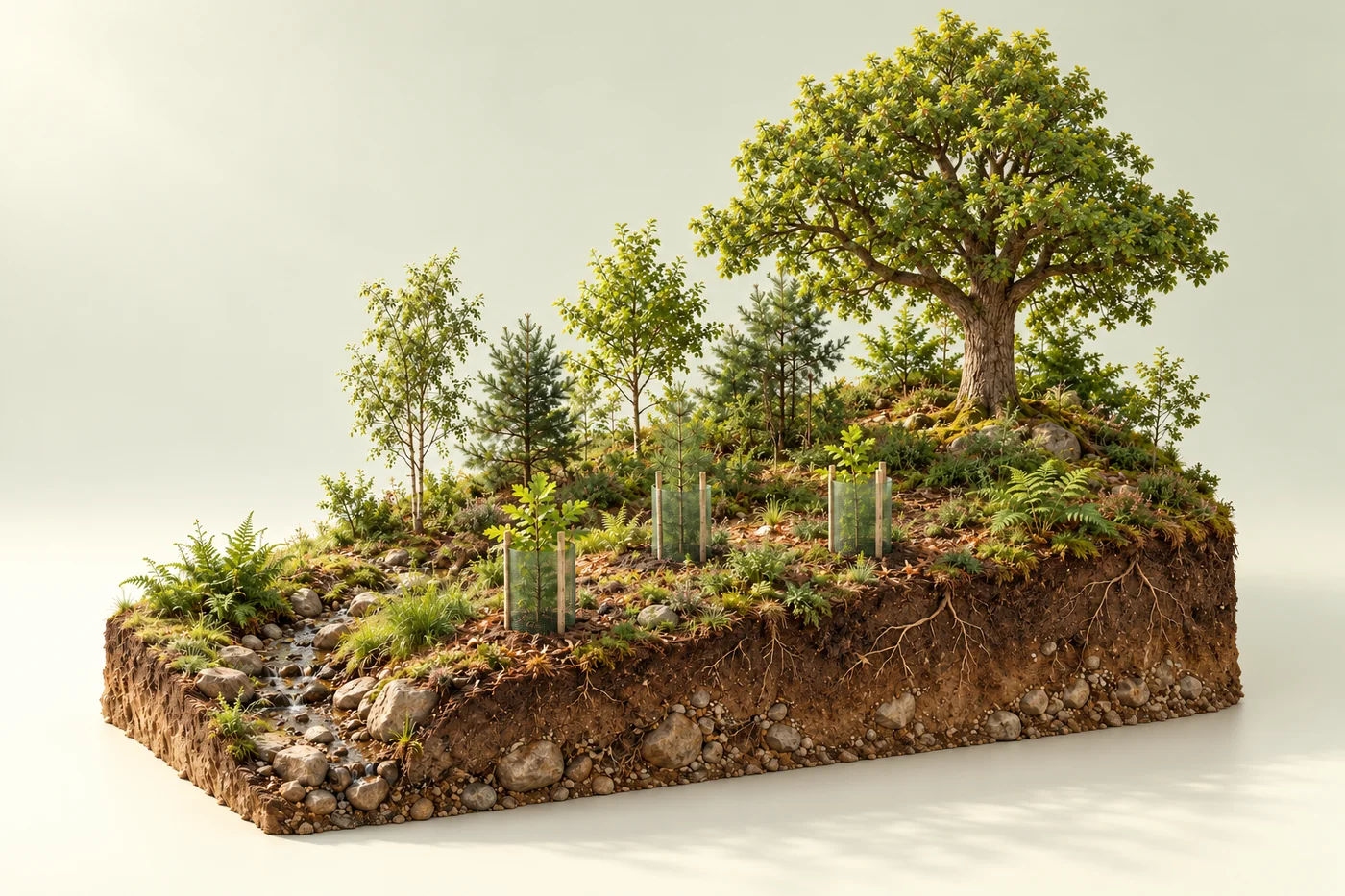
Explanatory illustration · not a depiction of an analysed propertySame species, different property dossiers
For two Douglas fir woodlands, create one line per stand: area, documented age, dimensions, quality, past interventions and next works. Request pruning evidence when timber quality supports the asking price. Check practical working access, not just a track on a photograph.
Young woodland may mainly require funding and care, while another stand may offer a harvest to investigate. Do not convert the difference into money without observations and relevant bids. Douglas fir sale results published in 2026 show why tree-volume categories matter, without establishing a per-hectare tariff.
From an average price to this property
An average describes completed sales, not the price of this woodland. Start with the actual scope, access, terrain, future works and comparable transactions. Explore national and departmental benchmarks. Standing timber prices in €/m³ concern a different market. When woodland sales include trees, do not add their value again.
Your first assessment with WoodWorth
Select parcels or draw only the portion that interests you. The report combines maps, canopy interpretation, market evidence and an explained valuation scenario. Explore a report based on real parcels. Guides and the map are free. Web report, PDF and field notebook free through 31 December 2026. No card, no subscription. Up to 20 parcels and 100 hectares per dossier. All analyses concern woodland in France.
COMMON QUESTIONS
A few things to clear up.
Can I multiply hectares by an average Douglas fir price?
That ignores stock, quality, non-wooded areas and site costs. It can produce a misleading figure; use comparable evidence and explicit assumptions.
Can imagery establish all timber quality?
No. Imagery shows apparent canopy, not internal defects, merchantable volumes or complete tree health. Appropriate inspection is still needed.
Sources and dates
Figures retain their reference year. Worked examples are educational; property-specific amounts require verification.
- CNPF — Itinéraires techniques du Douglas2020-04
- CNPF Île-de-France Centre-Val de Loire — Le Douglas – Fiche Essence 112023-09
Sources accessed 19 October 2026. Independent sources; no partnership implied.
This guide provides documentary context. For a binding decision, have field, legal or insurance issues checked by the relevant professional.