Define the decision before selecting the service
Explain what prompted the enquiry: a large branch above an entrance, an old tree near the house, visible damage or proposed building work. Describe future use, including daily access, parking or visitor areas. The consultant needs this context as well as the location.
Request an assessment of tree condition, necessary investigations and management recommendations. If you also want a commercial timber valuation, make that a separate instruction. Otherwise, you could receive a timber calculation when your purchase decision actually depends on maintenance requirements and the use of outdoor space.
Agree the trees on a simple numbered plan
Prepare a plan with numbered trees and general photographs. Identify those near buildings, routes, gathering places and property boundaries. Flag trees that may be outside the sale area without assuming who owns them. Ask the seller for relevant earlier reports.
Keep clear of visibly damaged branches when preparing the dossier. Record concerns for the professional instead of attempting to determine stability from photographs. The initial map mainly ensures that both parties understand which trees the quote includes. It also gives you a clear way to identify any omitted subjects before the visit.
Understand the initial inspection
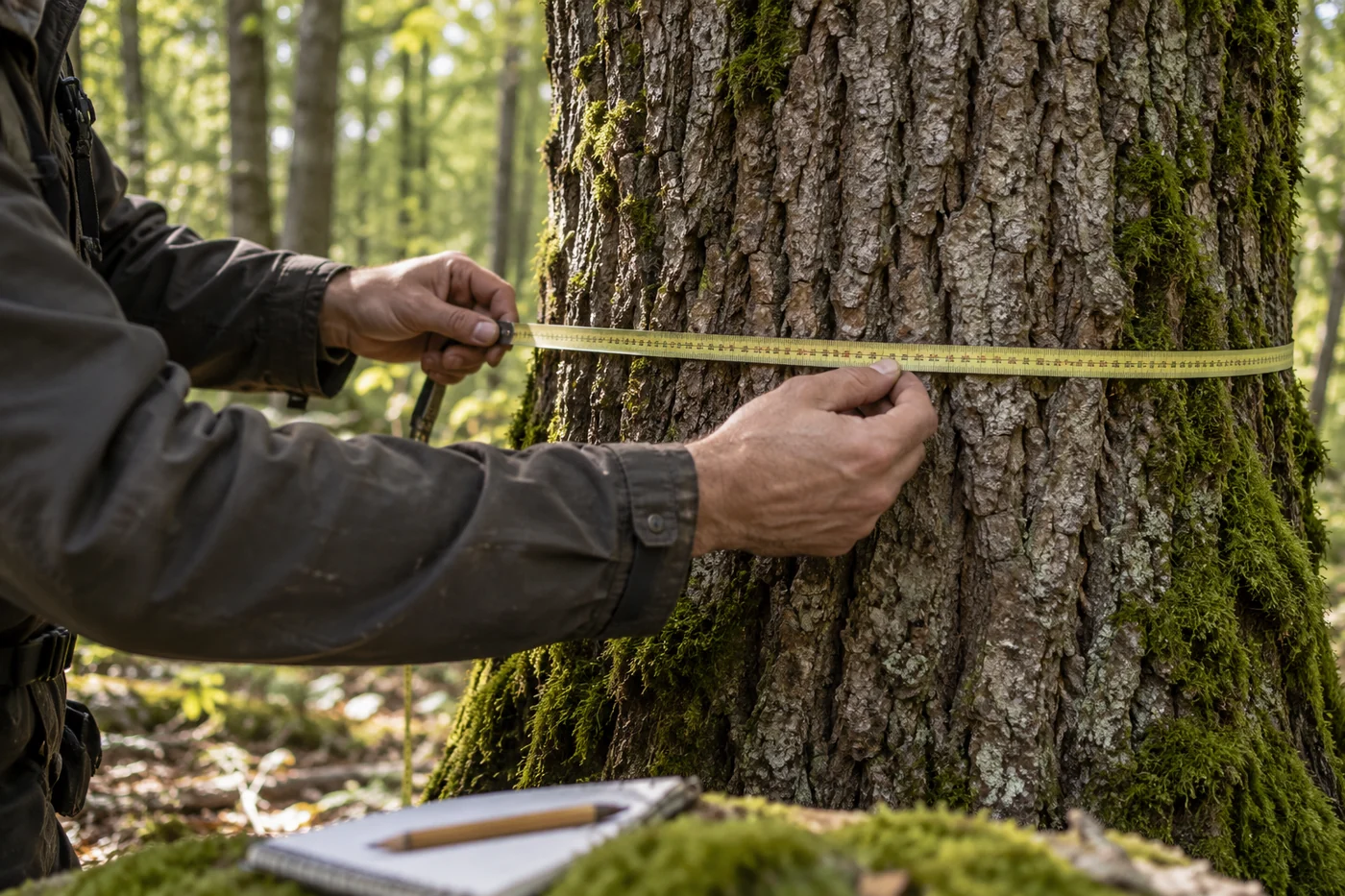
The ONF describes tree condition assessment covering the root collar, trunk and major branches, together with tree identification and recommendations for work or monitoring. Its conclusions relate to specific, located trees.
Ask what can be assessed from ground level, what will remain inaccessible and how those limitations will appear in the report. You should be able to find the relevant tree and understand the scope of the opinion. The word “surveyed” does not, by itself, explain the inspection method or the evidence available.

Gather the right documents and prepare the visit to compare assumptions with conditions on the ground.
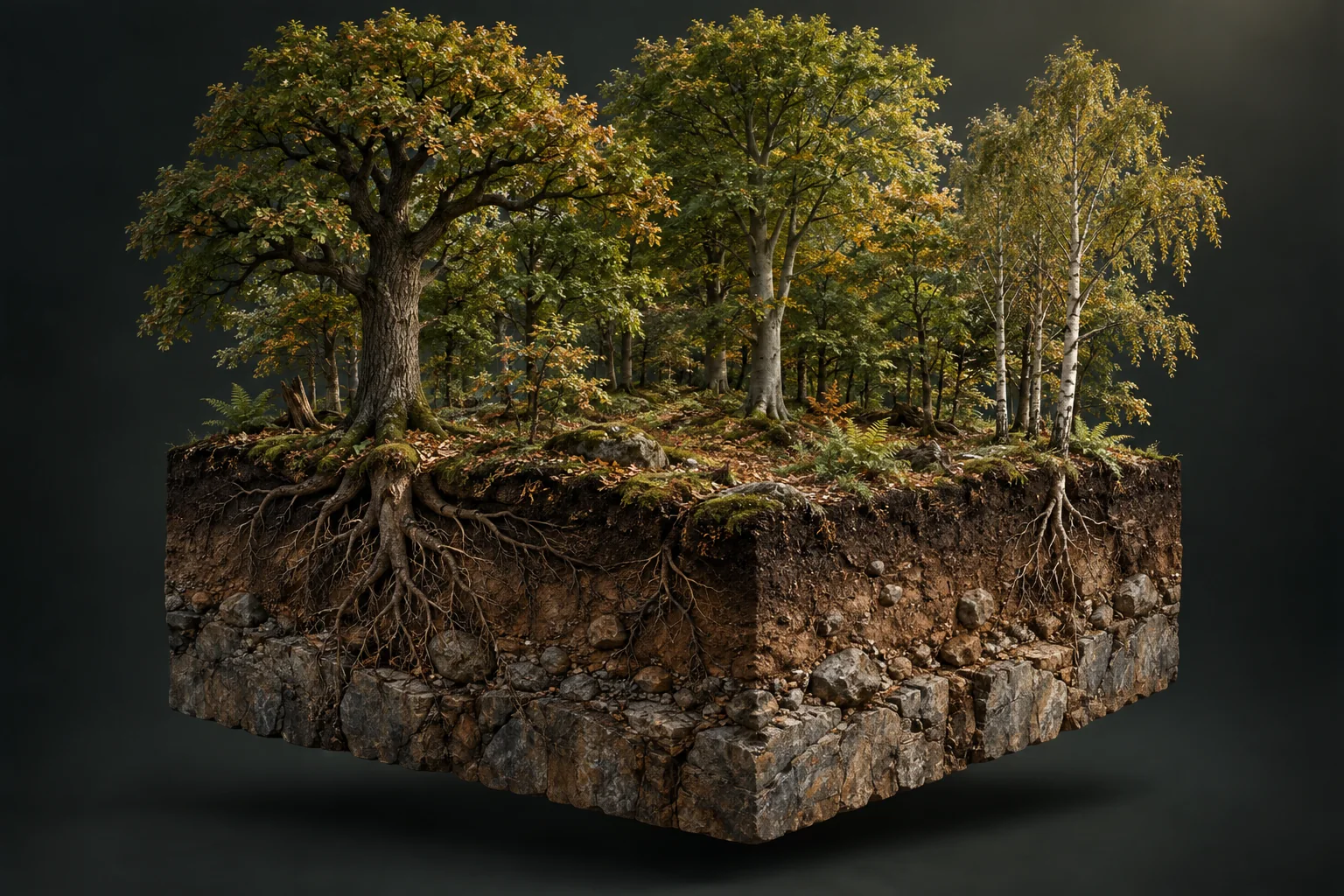
Editorial illustration · not a depiction of an analysed propertyAsk what further investigation would resolve
An initial inspection may lead to a focused investigation. The ONF describes tools including tomography and pull testing for particular questions. These are not automatic requirements for every tree.
Before approving extra work, ask which uncertainty the proposed investigation addresses, how the result could change the recommendation and what would remain unresolved. This makes it easier to evaluate a targeted proposal. A list of instruments alone does not establish why an investigation is useful, or whether its findings will affect the decision you need to make.
Specify a report that supports the purchase decision
| Report element | Purpose before purchase |
|---|---|
| Tree number and position | Connect the finding to the correct tree |
| Date and observations | Understand the evidence recorded |
| Inspection limitations | Identify matters not verified |
| Actions and timescales | Prioritise work |
| Suggested follow-up | Plan management after completion |
Ask for unfamiliar terminology to be explained. Monitoring, pruning and further investigation have different implications for timing and cost. Obtain separate works quotations where these costs influence the purchase decision.
Turn recommendations into an acquisition budget
Group proposed spending into work needed before the intended use, work that can be scheduled and future monitoring. Include contractor access requirements. Ask the mairie about any relevant permissions or restrictions; a technical recommendation is not automatically permission to undertake the work.
In a hypothetical example, a report requests further investigation before establishing a play area. The immediate budget item is that investigation and the decision it enables. Budgeting automatically for removal would assume a conclusion the report has not reached. Keep these stages distinct in discussions with the seller.
Keep a usable record after buying
Provide available inspection history, earlier work, recent events and any proposed excavation. Retain the final report with its photographs, plan and subsequent work records. Ask which changes or events should prompt another consultation and who should receive those observations.
A survey records findings and recommendations at a particular time; it is not a permanent guarantee. For a larger French estate, distinguish trees close to regularly used areas from the wider woodland stands. A desktop woodland assessment can help with property research, but it does not replace an arboricultural inspection of those trees.
COMMON QUESTIONS
A few things to clear up.
Can a woodland valuation replace a tree survey?
No. Valuation addresses financial value or economic potential. An arboricultural survey examines identified trees and makes recommendations about their management and the surrounding uses.
Can photographs provide a complete tree diagnosis?
Photographs help prepare an inspection but cannot show every side, ground condition or hidden defect. Ask the consultant to state the limitations of any remote response.
Does a cavity mean a tree must be removed?
A cavity calls for assessment in context, not an automatic conclusion. Depending on the findings, the professional may recommend monitoring, further investigation or intervention.
Sources and dates
Figures retain their reference year. Worked examples are educational; property-specific amounts require verification.
- Office national des forêts — Arbre Conseil : connaître l’état sanitaire des arbres d’alignementConsulté le 19/10/2026
- Office national des forêts — Arbre Conseil : diagnostic visuel et sonore d’un patrimoine arboréConsulté le 19/10/2026
Sources accessed 19 October 2026. Independent sources; no partnership implied.
This guide provides documentary context. For a binding decision, have field, legal or insurance issues checked by the relevant professional.