Describe the damage first
CNPF’s January 2024 guidance calls for mapping affected zones and diagnosing damage, including at the edges. Apparently green trees may need monitoring. Pre-fire imagery no longer represents current conditions.
Separate the budget components
Consider land, recoverable timber, extraction and safety works, soil protection and regeneration. Slope and erosion can change the approach. Prompt harvesting is appropriate only where diagnosis, markets and applicable rules support it.
Who receives compensation and pays for works?
Check whether timber is already sold and works are committed. Compensation received by the seller is not automatically money available to the buyer. Clarify the rights and obligations transferred in the sale documents.
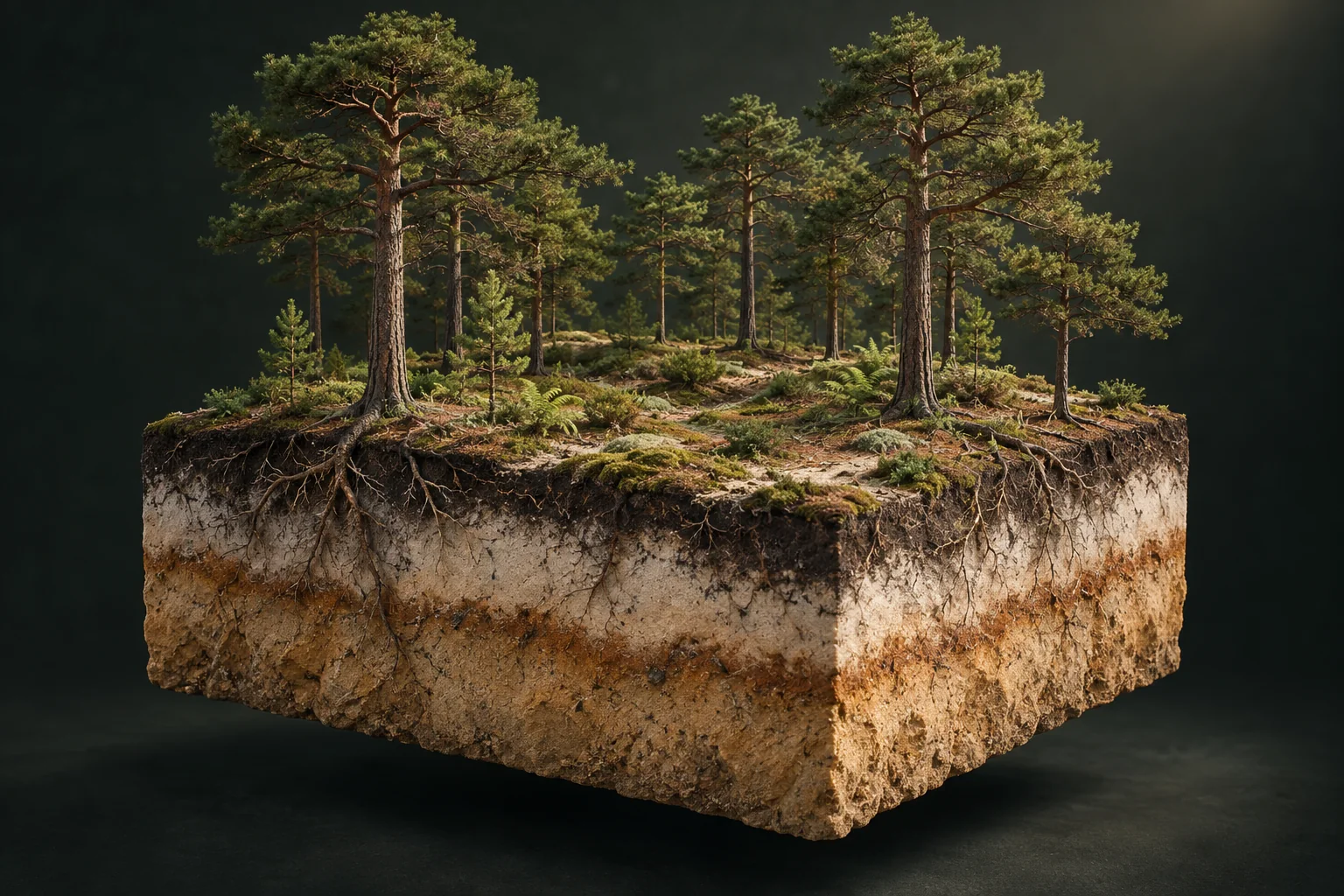
Soil, water and site conditions help explain a stand. This cutaway illustrates questions to ask; it does not diagnose a property.
Explanatory illustration · not a depiction of an analysed propertyKnow the limits of a remote estimate
Request a field visit, quotations and a dated regeneration assessment. Natural regeneration or planting depends on the site. WoodWorth can prepare the scope and market evidence; a recent fire requires post-fire observations and appropriate professional assessment.
From guide to selection
Web report, PDF and field notebook free through 31 December 2026. No card, no subscription. Up to 20 parcels and 100 hectares per dossier. See a report on real parcels.
Sources and dates
Figures retain their reference year. Worked examples are educational; property-specific amounts require verification.
- CNPF — Que faire après un incendie ? Les étapes clés2024-01-24
- CNPF-IDF / CNPF Nouvelle-Aquitaine — Diversification et reconstitution post incendie dans le massif des Landes de Gascogne – Rapport 20222022
Sources accessed 28 September 2026. Independent sources; no partnership implied.
This guide provides documentary context. For a binding decision, have field, legal or insurance issues checked by the relevant professional.