

Before purchase: define the scope
Identify the parcels and rights being sold. If only a portion interests you, ask the notaire and surveyor about subdivision steps, costs and timing. Drawing a portion in WoodWorth analyses that area; it does not create a new cadastral parcel.
At completion: request an itemised estimate
Ask the notaire for a written estimate specific to the transaction. Add any brokerage or advisory fees you actually owe. A percentage quoted for residential property is not a quotation for this woodland. Also clarify commitments attached to the land.
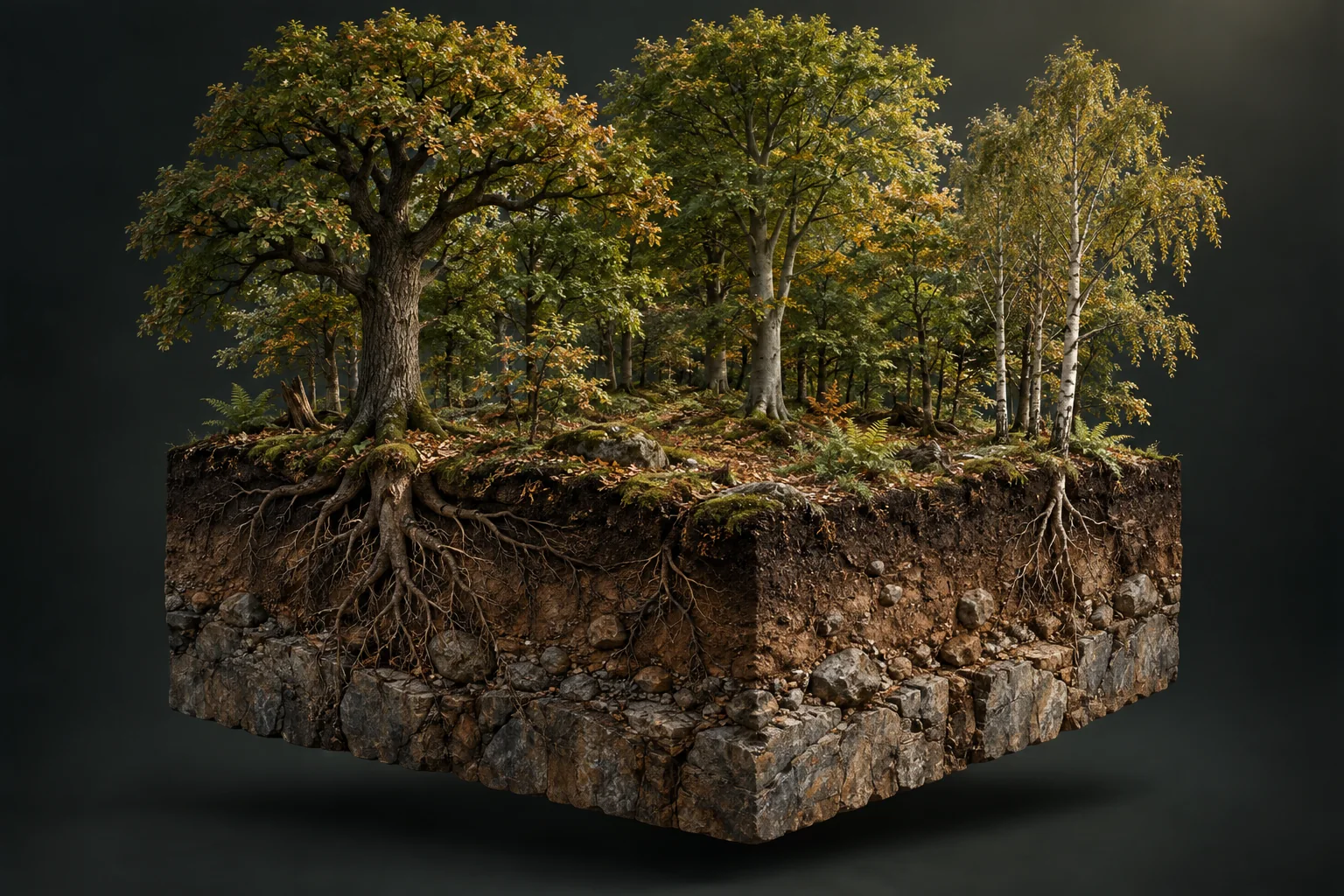
Species, ages and stand structure change how woodland is assessed. A visit helps compare hypotheses with the trees actually present.
Explanatory illustration · not a depiction of an analysed propertyAfter purchase: list the first expenses
Create a separate line, owner and date for each need:
- making access safe and restoring tracks;
- stand assessment and work planning;
- young-tree care or renewal;
- insurance and monitoring;
- property-specific taxes, charges and obligations.
Compare woodlands on the same basis
Similar asking prices can cover very different situations. Tabulate purchase costs, immediate expenses, recurring costs and later works. Mark unknown items “quotation needed” instead of assuming zero. Also establish whether a revenue-producing harvest has already been sold.
Understand what the report covers
The WoodWorth fee pays for a documentary web and PDF dossier. It excludes acquisition costs, an expert’s visit and boundary surveying. The report helps identify what to investigate before commissioning work suited to the project.
Sources and dates
- Notaires de France — Acheter ou vendre une forêt : comment s’y prendre ? · 22 avril 2020 · principes généraux, fiscalité à vérifier
- CNPF — Achat et vente de forêt et parcelles boisées · août 2025
- CNPF — Vente de bois · consulté le 29 septembre 2026
Accessed 29 September 2026. Independent sources; no partnership implied.