Start with the treatment area and site assessment
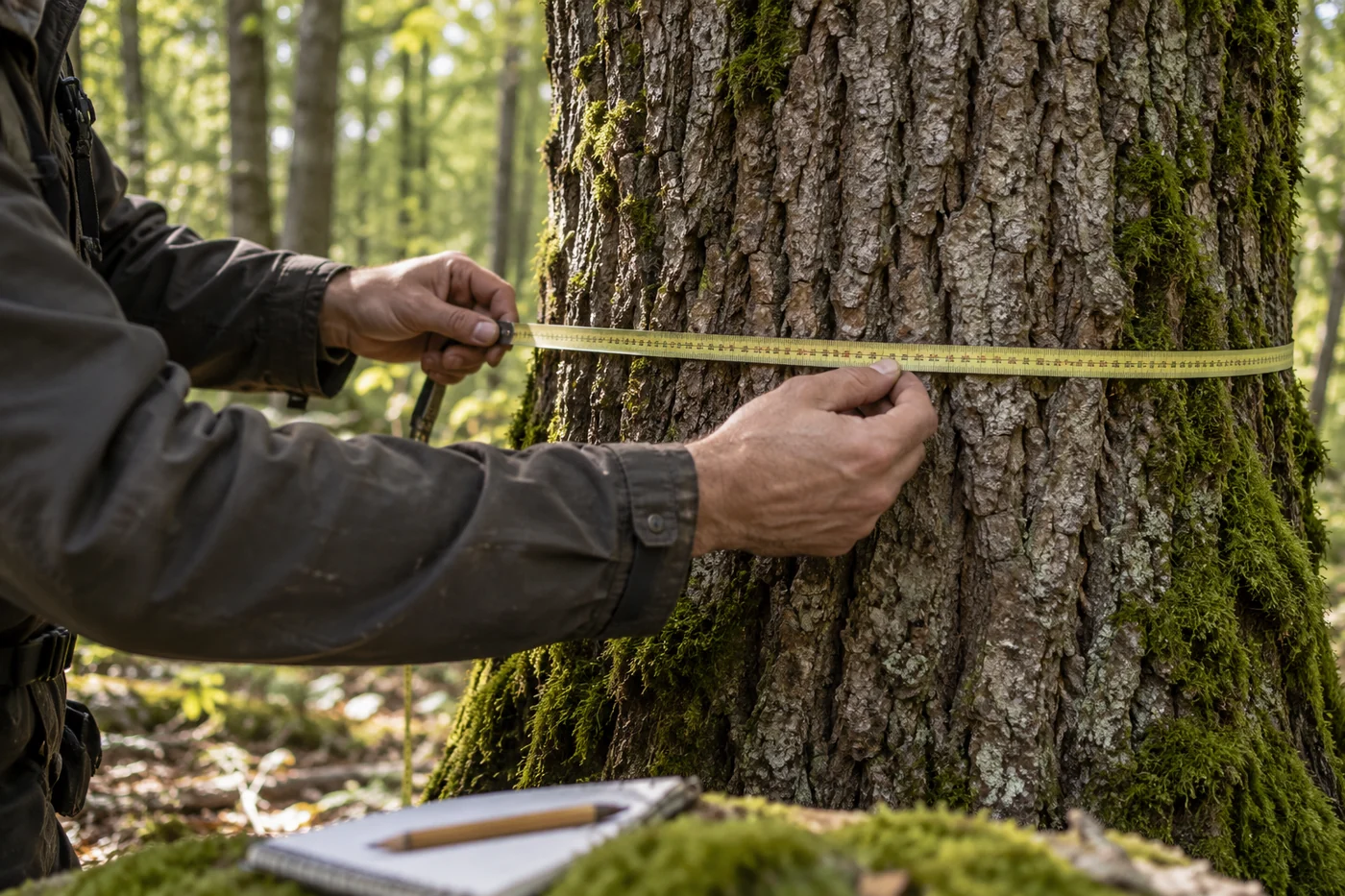
The cadastral area may include a track, established regeneration, habitat to retain or remaining stands. Have the proposed work areas drawn and measured. Every quotation should use the same denominator for its per-hectare amount.
Before selecting seedlings, ask how the adviser assesses soil, water, exposure, neighbouring stands and browsing pressure. Also consider whether natural regeneration or enrichment has a role. The quotation should follow that assessment, not replace it.
Break the quotation into checkable items
| Item | Details to request |
|---|---|
| Assessment and preparation | Visit, prescriptions, necessary ground work |
| Supply | Species, provenance, quantity, delivery |
| Planting | Area, selected spacing or density, labour |
| Protection | Materials, installation, maintenance, removal |
| Follow-up | Visits, tending and establishment checks |
| Replacement | Any replacement planting and its conditions |
For each line, request quantity, unit, price, tax treatment and exclusions. Keep a separate section for later interventions outside the initial fixed price.
Calculate without presenting it as a market tariff
A hypothetical comparison exercise: an €8,000 quotation for 2 hectares actually treated equals €4,000/ha for that scope alone. If €2,000 of planned tending is excluded, the documented budget becomes €10,000, or €5,000/ha over the same period.
These amounts are neither WoodWorth prices nor French averages. They show why two per-hectare figures mislead if one stops on planting day and the other includes subsequent care. Use the same tax-inclusive or tax-exclusive basis throughout.
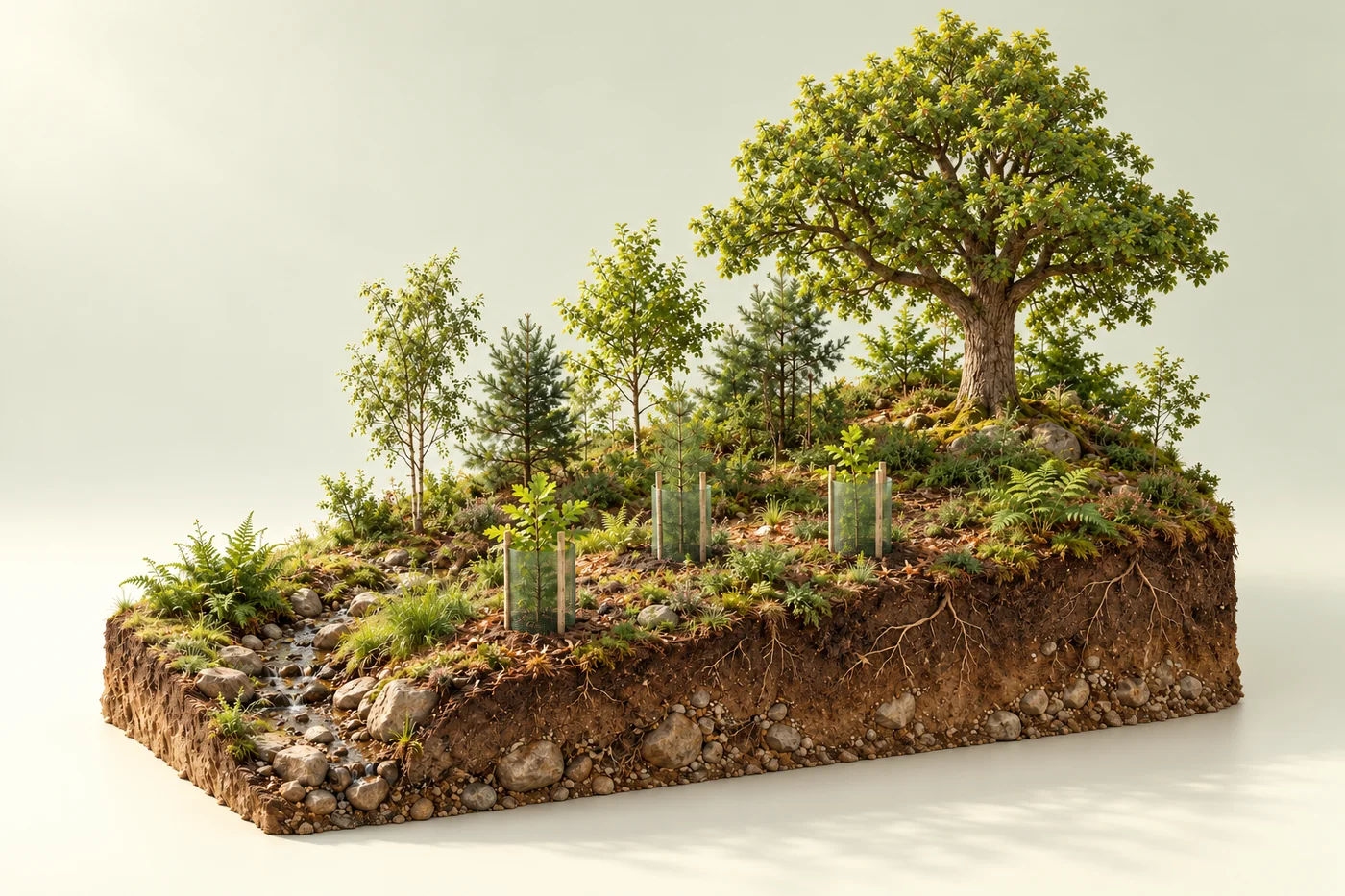
The landscape gives context; value depends on the selected land, its trees and access conditions.
Editorial illustration · not a depiction of an analysed propertyWhy two parcels may have different costs
Ask what changes the quotation: slope, soil bearing capacity, access, preparation, project size or scattered work areas. Have the proposed response to each difficulty explained. A cost premium should correspond to an identifiable service.
Timing matters too. Check plant availability, delivery inspection, work period and follow-up after planting. For protection measures, establish who detects damage, intervenes and removes materials once no longer useful. These questions make proposals comparable without prescribing a planting system remotely.
Treat grants as conditional finance
The schemes described by CNPF PACA illustrate local requirements and ceilings, not a national planting price. The CNPF Île-de-France Centre-Val de Loire cost reference consulted is dated 2019; changing its title cannot make it a 2026 tariff.
Request the current rules for a scheme available to your project, application deadline, eligible expenses and payment timing. Separate total cost, potentially supported expenditure and cash to advance. Do not commit spending solely on the assumption that it will be reimbursed.
Use the budget when considering a purchase
For recently harvested land, ask which works have already been commissioned and who pays for them. Tabulate purchase cost, immediate works and follow-up. Have the renewal commitments applicable to the actual property examined.
A WoodWorth report helps define the scope and terrain context. It replaces neither a site assessment nor a planting quotation. When negotiating, present quotations and assumptions instead of applying a blanket discount to every harvested woodland.
COMMON QUESTIONS
A few things to clear up.
What is the average cost per hectare of replanting?
A single amount mixes very different projects. Request an itemised quotation covering follow-up, then divide the total by the area actually treated.
Must the whole cadastral area be replanted?
Not necessarily. Assessment should distinguish retained areas, existing regeneration, enrichment and any planting. Have the proposed scope and method justified professionally.
Does a grant immediately reduce cash needed?
Not always. Conditions and payment dates depend on the scheme. Obtain a written funding plan and distinguish possible eligibility from awarded funding.
Sources and dates
Figures retain their reference year. Worked examples are educational; property-specific amounts require verification.
- CNPF PACA — Vous souhaitez planter ou reboiser ?Consulté / Accessed 19 October 2026
- CNPF Île-de-France Centre-Val de Loire — Référentiel coûts des travaux — barème 2019Consulté / Accessed 19 October 2026
- CNPF-IDF — Bien préparer une plantationConsulté / Accessed 19 October 2026
Sources accessed 19 October 2026. Independent sources; no partnership implied.
This guide provides documentary context. For a binding decision, have field, legal or insurance issues checked by the relevant professional.